
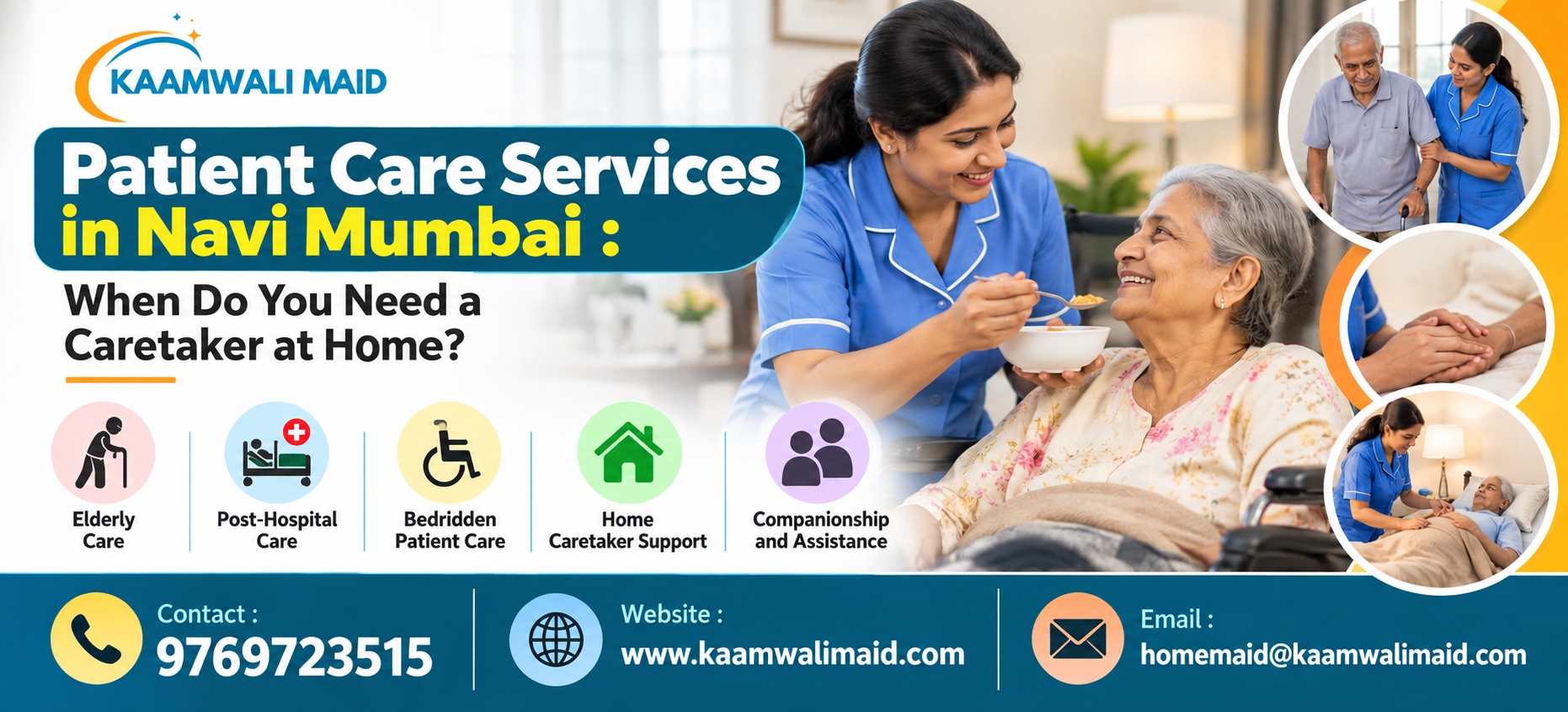
Patient Care Services in Navi Mumbai : When Do You Need a Caretaker at Home? – Kaamwali Maid
Introduction
Caring for a family member who needs regular assistance can become challenging, especially when other family members have work, household, or personal responsibilities. Elderly people, individuals recovering after hospitalization, people with limited mobility, and those who need help with everyday activities may benefit from having a trained caretaker at home.
Professional Patient Care Services in Navi Mumbai can provide practical assistance and supervision while allowing the person to remain in a familiar home environment. Families looking for dependable home-care assistance can explore Kaamwali Maid for caretaker and household support services based on their individual requirements.
A home caretaker can support everyday activities such as mobility, personal hygiene, meals, companionship, and routine assistance based on the individual’s needs and the family’s instructions. Choosing appropriate patient care at home can also help ensure that someone is available to assist your loved one when family members cannot be present throughout the day.
What Are Patient Care Services at Home?
Patient care services at home provide non-hospital assistance to people who need support with everyday activities, mobility, personal care, or supervision. Depending on the individual’s requirements, a caretaker may provide assistance for several hours, during the daytime or nighttime, or on a live-in basis.
The purpose is to make everyday activities safer and more manageable while helping the individual remain comfortable in their own home. The exact duties of a caretaker should be clearly discussed before the service begins.
It is also important to distinguish general caretaker services from skilled nursing or medical care. Tasks requiring a qualified healthcare professional should only be performed by appropriately trained personnel.
Who May Need a Caretaker at Home?
A home caretaker may be helpful for elderly people, individuals recovering after hospitalization, bedridden patients, or people with limited mobility. Caretakers can provide assistance when everyday activities such as bathing, dressing, walking, eating, or maintaining a daily routine become difficult. They can also provide companionship and general supervision when family members are unavailable. The level of support should be selected according to the individual’s specific needs and dependency.
When Should You Consider Patient Care Services in Navi Mumbai?
Families do not necessarily need to wait until a person becomes completely dependent before considering assistance. A caretaker may become useful when routine activities are becoming increasingly difficult or when leaving the person alone for extended periods creates practical concerns.
For example, an elderly family member may still be relatively independent but may need assistance while walking, bathing, dressing, or preparing for daily activities. Similarly, someone returning home after hospitalization may temporarily need additional support until they regain independence.
Choosing Patient Care Services in Navi Mumbai at the appropriate time can help families arrange consistent day-to-day assistance according to the person’s changing needs.
Elderly Care and Daily Assistance
Ageing can gradually affect mobility, balance, stamina, and the ability to complete everyday tasks independently. Some senior citizens may only need occasional assistance, while others may require more regular support.
A caretaker can assist elderly individuals with activities such as getting up safely, walking around the house, changing clothes, maintaining personal hygiene, and following their normal daily routine.
Companionship can also be an important part of elderly care. Having someone available during the day can provide practical support and regular social interaction, particularly when other family members are away.
Patient Care After Hospital Discharge
Returning home after hospitalization can require adjustments to everyday routines. Depending on the person’s condition and the treating doctor’s advice, additional assistance may be needed during the recovery period.
A caretaker can support non-medical daily activities such as mobility, meals, personal hygiene, changing positions, and maintaining a comfortable environment.
Families should follow the discharge instructions provided by the hospital or treating doctor. Medical procedures, wound management, injections, or other skilled healthcare tasks should be handled by appropriately qualified professionals when required.
Care for People With Limited Mobility
Limited mobility can make ordinary activities such as getting out of bed, walking to the bathroom, changing clothes, or moving around the home more difficult.
A caretaker can provide physical assistance and supervision according to the person’s abilities and care requirements. Families should also consider whether the home environment needs adjustments, such as better lighting, clear walking paths, suitable bathroom support, or other mobility aids recommended by healthcare professionals.
The aim should be to support the individual’s independence wherever reasonably possible rather than unnecessarily taking over activities they can perform safely themselves.
Bedridden Patient Care at Home
A bedridden individual may require more frequent assistance because many everyday activities cannot be performed independently.
Depending on the care plan, assistance may include personal hygiene, meals, changing clothes, repositioning, maintaining the immediate surroundings, and helping with other routine needs.
Bedridden individuals can have more complex care requirements, so families should obtain appropriate medical guidance where necessary. A general caretaker should not be expected to perform specialized nursing procedures unless properly trained and qualified.
Personal Hygiene and Grooming Assistance
Maintaining personal hygiene can become difficult for individuals with limited mobility, reduced strength, or age-related limitations.
Depending on the agreed responsibilities, a caretaker may assist with bathing, dressing, grooming, oral hygiene, and toileting routines. These tasks should be performed respectfully while protecting the person’s privacy and dignity.
Families should clearly communicate the individual’s preferences and any special instructions before care begins.
Meal and Daily Routine Support
Some people who require home care may also find it difficult to manage their regular meal and daily routines independently.
A caretaker may assist with serving meals, providing drinking water, helping the person sit comfortably during meals, and supporting other routine activities as agreed with the family.
If the person has a medically prescribed diet, diabetes, swallowing difficulties, food allergies, or another condition affecting nutrition, dietary instructions should come from the appropriate healthcare professional.
Companionship and Supervision
Home care is not limited to physical assistance. Some elderly or dependent individuals may benefit from having someone present for conversation and everyday companionship.
A caretaker can spend time with the individual, accompany them during appropriate activities, and provide general supervision when family members are unavailable.
For families with work commitments, this can provide practical support by ensuring that their loved one is not routinely left alone for extended periods when assistance may be needed.
Day Care, Night Care or Full-Time Care?
The appropriate schedule depends on when the individual actually needs assistance.
Some families may require a caretaker only during working hours. Others may need night-time support because the person requires assistance getting out of bed or using the bathroom. Individuals with greater dependency may require longer-duration or live-in support.
Before selecting a service, families should assess the person’s routine throughout the entire day rather than choosing hours solely on convenience.
How to Choose the Right Caretaker at Home
Choosing the right caretaker starts with clearly understanding the person’s daily care requirements and expected working hours. Families should consider the caretaker’s previous experience, ability to assist with mobility and personal hygiene, communication skills, and suitability for the required duties. Responsibilities and limitations should be discussed clearly before the service begins. If skilled medical care is required, an appropriately qualified healthcare professional should be arranged instead.
Caretaker vs Nurse: Understanding the Difference
A caretaker and a qualified nurse generally perform different roles.
A caretaker primarily provides assistance with everyday non-medical activities such as mobility, hygiene, meals, companionship, and routine supervision.
A nurse is a trained healthcare professional who may perform clinical tasks within their professional scope, such as certain wound-care procedures, medication-related clinical tasks, or other nursing interventions.
Families should select the appropriate type of support based on the person’s medical and daily-care requirements.
Benefits of Patient Care at Home
Home-based patient care allows individuals to receive everyday assistance without unnecessarily leaving their familiar surroundings. For elderly people and individuals recovering after hospitalization, remaining at home can make daily routines easier to maintain.
A caretaker can provide consistent support for activities that have become difficult to perform independently. Home care can also reduce some of the day-to-day caregiving responsibilities placed on family members.
The main objective is to provide suitable assistance while respecting the person’s comfort, privacy, preferences, and level of independence.
What Should Families Discuss Before Hiring a Caretaker?
Before hiring a caretaker, families should create a clear list of responsibilities and expectations.
Discuss the person’s mobility level, daily schedule, personal care requirements, meal routine, working hours, and any activities where assistance is required. If there are instructions from a doctor or physiotherapist relevant to routine care, these should also be clearly communicated within the caretaker’s appropriate scope.
Clear expectations from the beginning can help avoid misunderstandings and make the home-care arrangement more organized.
Patient Care Services in Navi Mumbai – Kaamwali Maid
Families looking for Patient Care Services in Navi Mumbai can contact Kaamwali Maid for home caretaker assistance based on their household and patient-care requirements.
Depending on availability and requirements, families can discuss assistance for elderly people, individuals recovering at home, people with limited mobility, bedridden individuals, and those requiring support with everyday activities.
Before finalizing a caretaker, clearly explain the patient’s routine, level of dependency, required working hours, and specific responsibilities so that suitable assistance can be considered.
Looking for Patient Care Services in Mumbai?
If an elderly family member, recovering individual, or person with limited mobility requires regular assistance at home, choosing appropriate care can make everyday routines more manageable.
For Patient Care Services in Navi Mumbai, contact Kaamwali Maid to discuss your home-care requirements and the type of caretaker assistance needed.
Kaamwali Maid
🌐 Website: www.kaamwalimaid.com
📞 Contact: 9769723515
📧 Email: homemaid@kaamwalimaid.com
Patient Care Services in Navi Mumbai Patient Care Services in Navi Mumbai Patient Care Services in Navi Mumbai Patient Care Services in Navi Mumbai Patient Care Services in Navi Mumbai Patient Care Services in Navi Mumbai Patient Care Services in Navi Mumbai Patient Care Services in Navi Mumbai Patient Care Services in Navi Mumbai Patient Care Services in Navi Mumbai