
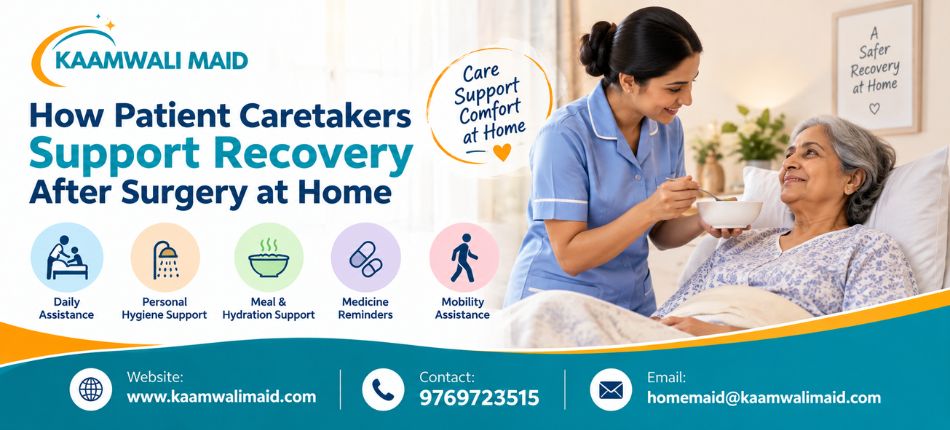
How Patient Caretakers Support Recovery After Surgery at Home | Post Surgery Patient Care – Kaamwali Maid
Recovering after surgery does not end when a patient leaves the hospital. The days and weeks spent at home can be an important part of the recovery process. During this period, patients may experience weakness, limited mobility, discomfort, tiredness, or difficulty managing everyday activities independently. This is where professional Post Surgery Patient Care at home can provide valuable day-to-day assistance.
A trained patient caretaker can support the patient with personal hygiene, safe movement, meals, medicine reminders as instructed, mobility assistance, and routine daily activities. Families looking for dependable home support can explore Kaamwali Maid for patient caretaker services based on their household and care requirements.
What Is Post Surgery Patient Care at Home?
Post-surgery patient care at home refers to non-medical daily assistance provided to a person recovering after an operation. The exact level of support depends on the type of surgery, the patient’s age, mobility, doctor’s instructions, and overall recovery needs.
A patient caretaker does not replace a doctor, nurse, or physiotherapist. Instead, the caretaker assists with everyday activities and helps the patient follow the home routine recommended by healthcare professionals.
This support can be particularly helpful when family members cannot remain with the patient throughout the day.
Why Is Home Care Important After Surgery?
After being discharged from the hospital, some patients may still require considerable assistance. Even simple activities such as getting out of bed, walking to the bathroom, changing clothes, or preparing meals may temporarily become difficult.
Having a caretaker at home can make these daily tasks more manageable while allowing the patient to recover in a familiar environment. It can also reduce some of the routine caregiving responsibilities placed on family members.
The goal of Post Surgery Patient Care is to provide practical assistance while respecting the patient’s comfort, privacy, independence, and medical instructions.
How Do Patient Caretakers Support Recovery After Surgery?
The responsibilities of a patient caretaker can vary considerably depending on the patient’s condition and the type of assistance requested by the family. Some common areas of support include the following.
1. Assistance With Daily Activities
Patients may have difficulty performing normal daily activities immediately after surgery. A caretaker can assist with routine tasks such as dressing, grooming, moving around the home, arranging personal belongings, and other everyday needs.
The level of assistance should be adjusted according to the patient’s abilities and healthcare provider’s instructions.
2. Personal Hygiene Support
Maintaining personal hygiene can become challenging when movement is restricted.
A caretaker may assist with bathing or sponge bathing, changing clothes, oral hygiene, toileting, and other personal-care activities when appropriate. Care should always be provided while maintaining the patient’s dignity and privacy.
Any wound or surgical-site care requiring clinical skills should be handled according to the healthcare team’s instructions and, where necessary, by an appropriately qualified healthcare professional.
3. Safe Mobility Assistance
Walking and movement can sometimes be difficult after surgery, particularly during the initial recovery period.
A patient caretaker can provide day-to-day assistance while the patient gets out of bed, moves around the room, uses the bathroom, or walks within the home, as permitted by the treating healthcare professional.
If a walker, wheelchair, or other mobility aid has been recommended, the caretaker can help the patient use it as instructed.
4. Meal and Hydration Support
Adequate food and fluids may be important during recovery, but patients can sometimes find cooking and meal preparation difficult.
A caretaker can assist with preparing or serving meals according to the dietary instructions provided by the doctor or dietitian. They can also help keep water and other permitted fluids conveniently accessible.
The caretaker should not independently prescribe diets or supplements for the patient.
5. Medicine Reminders
After surgery, patients may be given medicines with specific instructions from their healthcare provider.
A non-medical patient caretaker can help by reminding the patient about medicines according to the prescribed schedule and assisting with routine organization where appropriate.
However, a caretaker should not change medicine doses, introduce new medicines, or provide medical advice unless appropriately qualified and authorized to do so.
6. Maintaining a Clean and Comfortable Environment
A clean and organized home environment can make the recovery period more comfortable.
Caretakers may help keep the patient’s immediate surroundings tidy, change bedding when required, organize frequently used items, and ensure that walking areas remain free from unnecessary obstacles.
Frequently needed items such as water, a phone, tissues, prescribed medicines, and mobility aids can also be kept within convenient reach.
Supporting Patients With Limited Mobility
Limited mobility is common after certain surgeries. Patients may temporarily need assistance getting in and out of bed, sitting down, standing up, walking, or using the bathroom.
A caretaker can provide physical assistance within the limits recommended by the patient’s healthcare team. However, lifting or transferring a patient incorrectly can cause injury to both the patient and caretaker.
Families should therefore communicate any specific mobility or transfer instructions provided by doctors or physiotherapists before home care begins.
Emotional and Companionship Support
Recovery can sometimes feel isolating, especially for older adults or people who spend much of the day resting at home.
Having someone available for conversation and routine companionship can make the home environment feel more supportive. A caretaker can accompany the patient during everyday activities and provide reassurance when assistance is needed.
While companionship does not replace professional mental-health support when required, it can be a useful part of everyday home care.
Helping Patients Follow Their Recovery Routine
Doctors and physiotherapists may provide instructions about movement, rest, diet, follow-up appointments, medicines, or exercises.
A caretaker can help the patient stay organized around these instructions. For example, they may remind the patient about an appointment, help prepare for a scheduled physiotherapy session, or assist with activities that the healthcare professional has specifically permitted.
Importantly, caretakers should follow the care plan rather than independently changing it.
Post-Surgery Care for Elderly Patients
Older adults may require additional assistance after surgery because mobility, balance, strength, or existing age-related limitations can make daily activities more challenging.
An elderly patient may need support with walking, bathing, dressing, toileting, meals, medicine reminders, and general supervision during recovery.
Families should clearly explain the patient’s routine, mobility limitations, doctor’s instructions, and any special precautions to the caretaker.
If the patient’s medical condition changes, the appropriate healthcare professional should be contacted rather than relying solely on non-medical home care.
How Patient Caretakers Help Family Members
Post-surgery care can also be demanding for family members, particularly when they are balancing employment, household responsibilities, children, or other commitments.
A patient caretaker can take responsibility for many routine non-medical caregiving activities during agreed hours. This allows family members to focus on important decisions, medical appointments, and spending meaningful time with the patient rather than managing every daily task themselves.
Clear communication between the patient, family, caretaker, and healthcare professionals is important for maintaining an appropriate home-care routine.
What Should a Patient Caretaker Know Before Starting?
Before a caretaker begins supporting a post-surgery patient, the family should provide clear information about the patient’s daily routine and limitations.
Important information can include the doctor’s instructions, permitted level of activity, mobility assistance required, meal schedule, medicine-reminder schedule, emergency contact numbers, follow-up appointments, and any activities the patient has specifically been advised to avoid.
The caretaker should also understand which responsibilities are non-medical and which require a nurse, doctor, physiotherapist, or another qualified healthcare professional.
Patient Caretaker vs Home Nurse: What Is the Difference?
This distinction is important when arranging Post Surgery Patient Care.
A patient caretaker primarily provides non-medical assistance with everyday activities such as mobility, personal hygiene, meals, companionship, toileting, and routine reminders.
A qualified home nurse, depending on their professional scope and the treating doctor’s instructions, may provide clinical nursing services that require medical training.
If a patient requires injections, complex wound management, clinical monitoring, or another skilled medical procedure, families should confirm with the treating healthcare provider whether a qualified nurse or other healthcare professional is required.
When Should You Contact a Doctor?
Home caretakers can provide practical support, but they should not diagnose or treat post-operative complications.
Families should follow the discharge instructions given by the hospital or surgeon and seek medical advice if they notice concerning or unexpected symptoms. These may include difficulty breathing, chest pain, fainting, heavy or unexpected bleeding, high or persistent fever, worsening pain, unusual wound changes, sudden confusion, or other symptoms identified by the treating doctor as warning signs.
For severe or rapidly worsening symptoms, urgent medical assistance may be necessary.
How to Choose a Patient Caretaker for Post-Surgery Care
Choosing the right caretaker is important because the person may spend several hours each day assisting the patient.
Families should consider the caretaker’s experience, ability to assist with the patient’s specific daily needs, communication skills, hygiene practices, availability, and comfort with mobility assistance.
Before services begin, clearly discuss working hours, responsibilities, patient routine, permitted tasks, emergency contacts, and the boundaries between non-medical caregiving and professional medical care.
Benefits of Post Surgery Patient Care at Home
Appropriate home caretaker support can make everyday recovery routines easier to manage. Depending on the patient’s individual requirements, potential benefits include assistance with personal care, support with permitted mobility, help with meals and routine activities, medicine reminders, companionship, and a more organized home environment.
For families, having additional support can also make it easier to manage work and household responsibilities while ensuring that someone is available to assist the recovering patient.
Post Surgery Patient Care Services – Kaamwali Maid
Kaamwali Maid helps families looking for patient caretaker support at home for individuals who require assistance with everyday activities during recovery.
Depending on the family’s requirements and the agreed scope of service, a caretaker may assist with personal hygiene, mobility, meals, toileting, companionship, medicine reminders, and routine daily activities.
The exact care requirements should always be discussed beforehand, particularly when the patient has mobility limitations or needs medical or nursing procedures.
For clinical services, families should follow the advice of the treating doctor and arrange appropriately qualified healthcare professionals where required.
Conclusion
Recovery after surgery can involve much more than rest. Patients may temporarily need help with mobility, personal hygiene, meals, daily routines, and other activities that were easy to manage before the operation.
Professional Post Surgery Patient Care can provide practical non-medical assistance during this period while helping families manage everyday caregiving responsibilities. The caretaker’s role should complement—not replace—the advice and treatment provided by doctors, nurses, physiotherapists, and other healthcare professionals.
By selecting the right level of home support and following the patient’s medical instructions, families can create a safer, more comfortable, and well-organized environment during the recovery period.
Post Surgery Patient Care Post Surgery Patient Care Post Surgery Patient Care Post Surgery Patient Care Post Surgery Patient Care Post Surgery Patient Care Post Surgery Patient Care Post Surgery Patient Care Post Surgery Patient Care Post Surgery Patient Care Post Surgery Patient Care Post Surgery Patient Care Post Surgery Patient Care