
Patient Caretaker vs Nurse: Understanding the Difference – Kaamwali Maid
When a family member is recovering from surgery, managing a chronic illness, or struggling with daily activities due to old age, arranging appropriate care at home becomes an important responsibility. Many families consider hiring a patient caretaker or a nurse but are unsure about the differences between their roles.
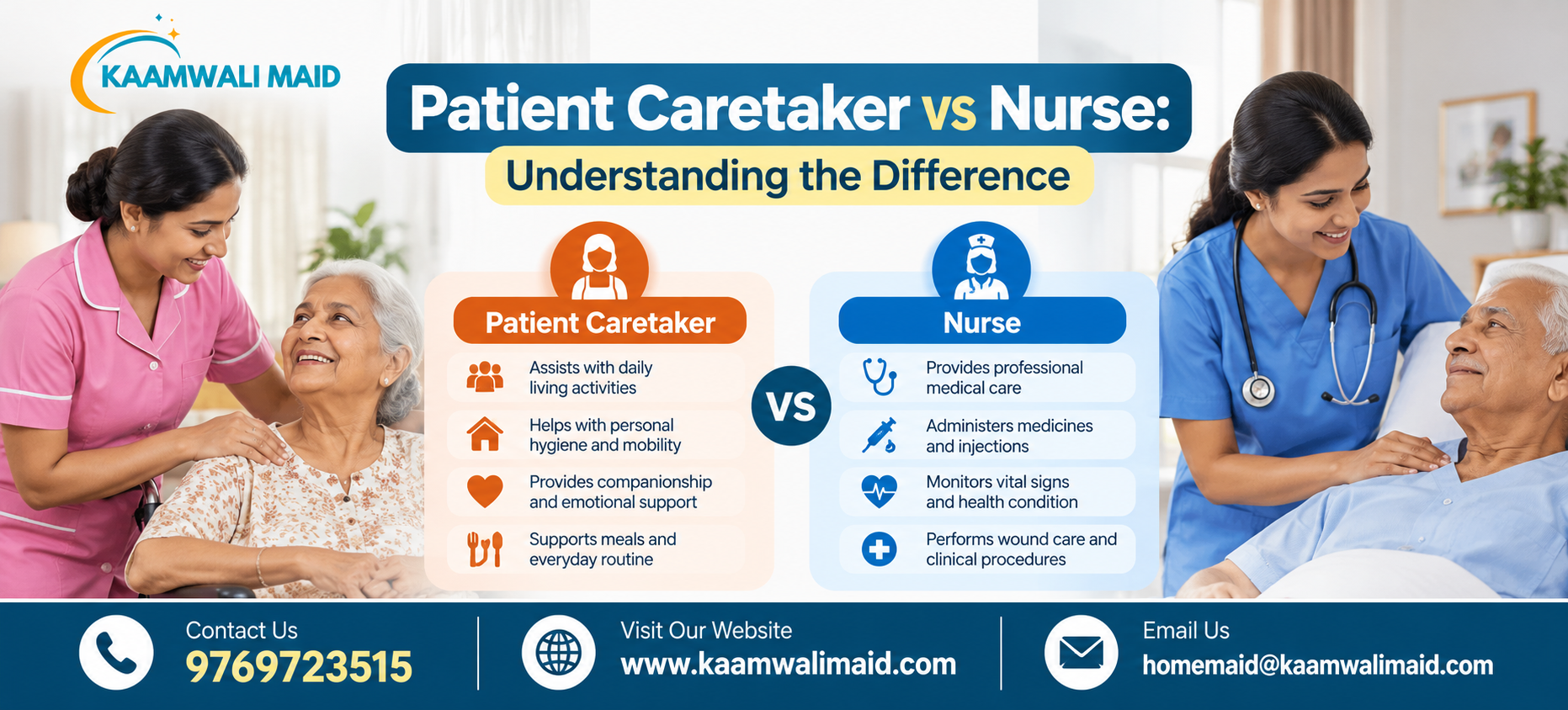
Although both professionals support patients, their responsibilities, training, and scope of work are different. A Patient Caretaker in Mumbai primarily assists with daily living activities, personal hygiene, mobility, and companionship, while a qualified nurse provides medical care, clinical monitoring, and treatments according to medical instructions.
Choosing the right type of support can improve patient comfort, safety, and overall home care management.
At Kaamwali Maid, families can enquire about home assistance and patient caretaker services in Mumbai based on their individual requirements.
This guide explains the differences between patient caretakers and nurses, their responsibilities, and how families can decide which type of home care support is appropriate.
1. What Is a Patient Caretaker?
A patient caretaker is a person who assists individuals who need support with everyday activities due to illness, disability, injury, recovery, or age-related limitations.
Patient caretakers primarily provide non-medical assistance to help individuals remain comfortable and manage daily routines at home.
Their responsibilities depend on the patient’s condition, mobility, personal needs, and the care arrangements agreed upon with the family.
Common Responsibilities of a Patient Caretaker
-
Assisting patients with bathing, dressing, and grooming.
-
Helping with walking, sitting, and routine movement.
-
Supporting eating and drinking when appropriate.
-
Assisting with toileting and personal hygiene.
-
Providing companionship and emotional support.
-
Helping patients maintain a comfortable daily routine.
-
Observing changes in the patient’s general condition and informing family members.
-
Reminding patients about prescribed medication schedules without independently administering or changing medication.
A patient caretaker does not replace a qualified nurse or doctor. Medical procedures, clinical assessments, injections, and other regulated healthcare tasks must be performed by appropriately qualified professionals.
2. What Is a Nurse?
A nurse is a healthcare professional who has completed recognized nursing education and meets the applicable registration requirements.
Nurses are trained to provide clinical care, monitor patients, recognize health-related complications, and carry out prescribed treatments within their professional scope.
Home nursing services may be recommended for patients who require medical supervision after surgery, have complex health conditions, or need specific clinical procedures.
Common Responsibilities of a Nurse
-
Monitoring vital signs such as blood pressure, pulse, and temperature.
-
Administering prescribed medications and injections within their scope.
-
Performing wound dressing and wound-care procedures.
-
Monitoring symptoms and changes in a patient’s medical condition.
-
Supporting patients with prescribed medical treatments.
-
Providing nursing care during post-surgical recovery.
-
Educating patients and family members about appropriate care procedures.
-
Coordinating with doctors and other healthcare professionals.
The exact responsibilities depend on the nurse’s qualifications, registration, clinical competencies, and the treating doctor’s instructions.
3. Patient Caretaker vs Nurse: Key Differences
Understanding the difference between a patient caretaker and a nurse helps families select suitable assistance for their loved ones.
| Comparison | Patient Caretaker | Qualified Nurse |
|---|---|---|
| Primary Role | Daily personal assistance | Professional medical and nursing care |
| Training | Varies according to experience and caregiver training | Recognized nursing education and applicable registration |
| Bathing and Dressing | Yes | May assist when clinically required |
| Mobility Assistance | Yes, within safe handling limits | Yes, including clinical assessment when appropriate |
| Feeding Assistance | Routine assistance when safe | Can manage more complex nursing needs within scope |
| Medication Support | Reminders and non-clinical assistance | Administration of prescribed medicines within scope |
| Injections | No | Yes, when authorized and competent |
| Wound Dressing | Not for clinical wounds | Yes |
| Vital Signs Monitoring | May report observable changes | Clinical monitoring and assessment |
| Companionship | Important part of the role | May provide emotional support alongside nursing care |
| Best Suited For | Daily living assistance and routine care | Patients requiring clinical treatment or monitoring |
Important: A patient caretaker and a nurse are not interchangeable. Some patients may require both types of support.
4. When Should You Hire a Patient Caretaker in Mumbai?
Hiring a Patient Caretaker in Mumbai may be appropriate when a family member needs regular assistance with daily activities but does not require continuous professional medical care.
Elderly Individuals Who Need Daily Assistance
Older adults may experience reduced mobility, weakness, or difficulty completing routine tasks independently. A caretaker can assist with bathing, dressing, walking, meals, and other personal activities.
This support may help elderly individuals continue living in a familiar home environment while reducing the physical responsibilities placed on family members.
Patients Recovering After Hospital Discharge
Some patients need assistance after returning home from hospital, even when their condition no longer requires regular nursing procedures.
A caretaker can help with approved movement, hygiene, meals, and daily routines while following the discharge instructions provided by healthcare professionals.
If the patient has surgical wounds, drains, injections, or other clinical needs, a qualified nurse may also be required.
Individuals with Limited Mobility
Patients experiencing difficulty walking or moving independently may require help with transferring between a bed and chair, moving around the home, and completing personal tasks.
Caretakers should use safe handling methods and should not attempt transfers beyond their training or physical capabilities.
Bedridden Patients Requiring Routine Support
A bedridden patient may need assistance with personal hygiene, positioning, feeding, and everyday comfort.
However, bedridden patients are at increased risk of pressure injuries and other complications. Their care plan should include appropriate medical or nursing assessment, particularly when repositioning, skin care, swallowing, or wound management is complex.
Individuals Requiring Companionship
Some elderly individuals spend long periods alone while family members are at work.
A caretaker may provide companionship, conversation, and help with routine activities, depending on the agreed service arrangement.
5. When Is a Qualified Home Nurse Necessary?
A qualified nurse is generally more appropriate when a patient requires clinical care that cannot safely be performed by an unlicensed caretaker.
Post-Surgical Wound Care
Patients recovering from certain operations may require professional wound dressing, monitoring for infection, or other prescribed nursing procedures.
Medication Administration and Injections
Patients requiring prescribed injections, intravenous treatments, or complex medication administration should receive care from appropriately qualified healthcare professionals.
Complex Medical Conditions
Patients with unstable health conditions or significant medical needs may require clinical monitoring and professional assessment.
Catheter and Medical Device Care
Some patients use urinary catheters, feeding tubes, or other medical devices that require trained handling and monitoring.
A qualified nurse should assess and perform procedures within their professional scope.
Patients Requiring Close Clinical Observation
Individuals experiencing significant changes in their health or recovering from serious illness may need professional nursing supervision.
Home nursing is not a substitute for emergency or hospital care when a patient’s condition is unstable.
6. Benefits of Hiring a Patient Caretaker for Home Care
Personalized Daily Assistance
One of the main benefits of hiring a patient caretaker is receiving assistance tailored to the patient’s everyday needs. Some individuals may need support with bathing and dressing, while others require help with walking, meals, or maintaining personal hygiene. A caretaker can follow an agreed routine based on the patient’s abilities and family preferences. This individualized assistance may help patients feel more comfortable and maintain greater independence in their familiar home environment.
Support for Working Family Members
Many families in Mumbai have demanding work schedules, making it difficult to provide continuous assistance to an elderly parent or recovering patient. A patient caretaker can help manage routine responsibilities during agreed working hours. This support may reduce the burden on family members while allowing them to remain involved in important care decisions.
Comfortable Care at Home
Receiving assistance at home allows patients to remain in a familiar environment surrounded by their personal belongings and family members. For elderly individuals or patients with limited mobility, this can make everyday routines easier to manage. A caretaker can assist with routine activities and help maintain a comfortable living environment.
Companionship and Emotional Support
Patients who spend significant time at home may experience loneliness or social isolation. A patient caretaker can provide companionship through conversation and routine interaction. While companionship does not replace mental healthcare, regular social engagement may contribute positively to a patient’s emotional well-being.
Assistance with Personal Hygiene
Patients with restricted mobility may struggle with bathing, changing clothes, grooming, or toileting. A caretaker can assist with these activities while respecting the patient’s privacy and dignity. Proper hygiene practices are particularly important for individuals who spend extended periods in bed or require regular personal assistance.
7. Can a Patient Caretaker Replace a Nurse?
No. A patient caretaker cannot replace a qualified nurse when a patient requires professional medical care.
A caretaker’s role focuses primarily on non-medical assistance, while a nurse is trained to perform clinical responsibilities.
For example, a patient recovering from knee surgery may need a caretaker for bathing, dressing, meals, and safe movement. The same patient may also require a nurse for prescribed wound care or injections.
Similarly, an elderly person with reduced mobility may benefit from daily caretaker assistance, while a person with complex medical needs may require professional nursing care.
The decision should be based on the patient’s condition and the treating healthcare professional’s recommendations.
8. Can a Patient Need Both a Caretaker and a Nurse?
Yes. Some patients benefit from a combination of non-medical caregiving and professional nursing support.
For example, a patient recovering from major surgery may require:
-
A caretaker for daily hygiene, meals, and personal assistance.
-
A nurse for prescribed wound care and clinical monitoring.
-
A physiotherapist for rehabilitation exercises and mobility training.
-
A doctor for medical assessment and treatment decisions.
Each professional performs a different role.
A coordinated care plan helps ensure that daily assistance and medical treatment are handled by appropriately trained individuals.
9. Important Qualities to Look for in a Patient Caretaker
Selecting a suitable patient caretaker involves more than checking availability.
Experience with Similar Care Requirements
Families should ask whether the caretaker has experience assisting individuals with similar mobility limitations or daily care needs.
Patience and Communication
A caretaker should communicate respectfully, listen to patient concerns, and remain patient when assisting individuals who need additional time to complete activities.
Personal Hygiene Practices
Good hygiene practices are important when assisting patients with bathing, toileting, feeding, and other personal activities.
Reliability and Punctuality
Families should confirm the caretaker’s working schedule, attendance expectations, and arrangements for leave or absence.
Safe Patient Handling
Caretakers should understand basic safety precautions and avoid attempting tasks that require specialized medical training.
Clear Understanding of Responsibilities
Before hiring, families should agree on the specific duties the caretaker will perform.
This helps prevent confusion between household work, patient assistance, and professional nursing responsibilities.
10. How to Choose the Right Patient Caretaker in Mumbai
Families should evaluate the patient’s requirements before arranging home assistance.
-
Assess the Patient’s Condition: Identify whether the patient needs daily personal assistance, medical care, or both.
-
Consult the Treating Doctor: Ask whether any activities require professional nursing supervision.
-
Define Daily Responsibilities: Clarify bathing, dressing, feeding, mobility, toileting, and companionship requirements.
-
Confirm Caretaker Experience: Discuss experience with elderly individuals, recovering patients, or mobility-related limitations.
-
Verify Identity and References: Ask about identity verification, reference checks, and any applicable background-verification process.
-
Discuss Working Hours: Confirm whether the requirement is for daytime, nighttime, full-day, or live-in assistance.
-
Clarify Charges and Terms: Understand service fees, working hours, replacement arrangements, and other applicable conditions.
-
Establish an Emergency Plan: Ensure the caretaker knows whom to contact if the patient’s condition changes or an emergency occurs.
A written understanding of duties and expectations can help families make more informed hiring decisions.
11. Patient Caretaker Services for Elderly Care in Mumbai
As people grow older, they may experience reduced mobility, physical weakness, joint pain, or difficulty performing everyday activities independently. Hiring a Patient Caretaker in Mumbai can help elderly individuals receive personalized assistance while remaining comfortable in their own homes. A patient caretaker supports daily activities such as bathing, dressing, grooming, walking, toileting, and meal assistance. They may also provide companionship and emotional support, which can be especially valuable for senior citizens who spend long hours alone while family members are at work. For elderly patients with limited mobility, caretakers can assist with safe movement and routine personal care according to their abilities and care instructions. Services like Kaamwali Maid can be contacted to discuss elderly care requirements and suitable home assistance arrangements. However, elderly individuals requiring injections, wound care, or regular medical monitoring should receive appropriate support from qualified nursing professionals.
12. Patient Caretaker for Bedridden Patients
Bedridden patients often require regular personal assistance because they cannot independently complete daily activities.
A caretaker may help with hygiene, meals, changing clothes, and maintaining a clean, comfortable environment.
However, prolonged immobility can increase the risk of pressure injuries, stiffness, respiratory complications, and other health problems.
Families should obtain professional guidance regarding repositioning schedules, pressure-relieving equipment, nutrition, hydration, and skin care.
If a patient has pressure sores, feeding difficulties, medical devices, or complex care requirements, a qualified nurse or other healthcare professional should be involved.
A caretaker should not independently perform wound treatment, tube feeding, injections, or other clinical procedures without the appropriate qualifications and authorization.
13. Patient Caretaker vs Nurse: Which Is More Affordable in Mumbai?
When comparing the cost of a Patient Caretaker in Mumbai with professional home nursing services, patient caretakers are generally more affordable because their responsibilities focus on non-medical daily assistance rather than specialized healthcare procedures. A patient caretaker typically helps with personal hygiene, feeding, mobility, companionship, and everyday activities, while a qualified nurse provides medical services such as prescribed injections, wound dressing, and clinical monitoring. The overall cost depends on several factors, including working hours, patient condition, caregiver experience, service duration, and whether daytime, nighttime, or live-in assistance is required. Families looking for long-term elderly care or routine patient assistance may find caretaker services a practical and cost-effective option. However, affordability should never compromise patient safety. If a patient requires medical treatment or professional nursing supervision, hiring a qualified nurse is essential. Kaamwali Maid can be contacted to enquire about patient caretaker services in Mumbai and discuss available arrangements based on individual care requirements.
14. Common Mistakes to Avoid When Hiring Home Care Support
Choosing a Caretaker for Medical Procedures
One of the most important mistakes is expecting a non-medical caretaker to perform injections, wound dressing, or other clinical procedures.
These responsibilities should be assigned to appropriately qualified healthcare professionals.
Not Explaining the Patient’s Condition
Families should clearly communicate the patient’s mobility limitations, daily care needs, relevant precautions, and emergency contact information.
Ignoring Safety Requirements
Patients with a history of falls, difficulty swallowing, or significant mobility limitations may need additional precautions and professional assessment.
Not Discussing Working Hours and Duties
Unclear expectations can lead to misunderstandings about responsibilities, working hours, and the level of assistance required.
Failing to Monitor Care Quality
Families should regularly communicate with the patient and caretaker, review the care arrangement, and address concerns promptly.
15. Why Consider Kaamwali Maid for Patient Caretaker Services in Mumbai?
Finding suitable home assistance can be challenging for families managing work, household responsibilities, and the needs of an elderly or recovering family member.
Kaamwali Maid is a service provider families can contact when exploring patient caretaker assistance in Mumbai.
When enquiring about a caretaker, families should explain the patient’s age, mobility, daily routine, and specific assistance requirements.
It is also important to clarify the expected working hours, caretaker experience, service charges, and available arrangements before confirming the service.
For patients requiring medical procedures, families should arrange care through appropriately qualified nursing professionals.
To enquire about home assistance, visit Kaamwali Maid’s official website.
Conclusion
Understanding the difference between a patient caretaker and a nurse is essential when arranging safe and appropriate home care.
A patient caretaker supports daily living activities, personal hygiene, mobility, and companionship, while a qualified nurse handles clinical care and prescribed medical procedures.
For elderly individuals, recovering patients, or people with limited mobility, a patient caretaker may provide valuable everyday assistance. However, patients with complex medical needs may require professional nursing services or a combination of both.
If you are looking for a Patient Caretaker in Mumbai, contact Kaamwali Maid to discuss your home assistance requirements.
Kaamwali Maid – Contact Details
Website: www.kaamwalimaid.com
Contact: 9769723515
Email: homemaid@kaamwalimaid.com
Patient Caretaker in Mumbai Patient Caretaker in Mumbai Patient Caretaker in Mumbai Patient Caretaker in Mumbai Patient Caretaker in Mumbai Patient Caretaker in Mumbai Patient Caretaker in Mumbai Patient Caretaker in Mumbai Patient Caretaker in Mumbai Patient Caretaker in Mumbai Patient Caretaker in Mumbai Patient Caretaker in Mumbai Patient Caretaker in Mumbai Patient Caretaker in Mumbai Patient Caretaker in Mumbai Patient Caretaker in Mumbai Patient Caretaker in Mumbai Patient Caretaker in Mumbai Patient Caretaker in Mumbai Patient Caretaker in Mumbai Patient Caretaker in Mumbai Patient Caretaker in Mumbai Patient Caretaker in Mumbai